Hello lovelies 😊😊 I’m sorry my post is a day late 😔 I want to be a queen that’s on time.
A few months ago, someone asked me, “what do you think of when you think of godly friendship?”. The word that kept coming to me was “psychological safety”. Obviously, this is reductionist in the sense that a single word can not capture the full breadth of friendship, but for me, that was the word that stuck in my mind. Since then, I’ve been pondering psychological safety, and really, I think it’s a continuation of a thought process or discussion God has been having with me.
Psychological safety is a phrase commonly used in the business world and workplace to describe the feeling of being able to speak up without fear of criticism and exclusion. This concept also applies to relationships on all levels, but in those circles it’s often called emotional safety. Because the term psychological safety is what stuck in my mind, I’m using it for the purposes of this post.
The importance of safety in relationships cannot be overemphasised. Without safety, the relationship’s depth is stunted. My relationship with God, with myself, and with others, all require a measure of psychological safety. We all have an innate need for safety and security and we seek to meet that. Sometimes, we even go to extreme lengths to meet that need. Often times, we downplay the importance of this need or perhaps are oblivious to it and how it affects our relationships.
The bible repeatedly paints a picture of a God who is a safe space for us. For example,
Proverbs 18:10 AMP “The name of the Lord is a strong tower; The righteous runs to it and is safe and set on high [far above evil].”
A major obstacle to building psychological safety is fear. Fear of rejection, of not measuring up, of not belonging, fear of punishment. At times, we might think this safety (from the verse above) only refers to safety from physical danger but physical danger is not the only form of danger out there, coming against us. The weapons vary and psychological danger is very much a weapon. Whether it is real (in an externally validated way) or it’s perceived (internally), it’s still real to the person experiencing it and requires a solution.
Until we attain a measure of psychological safety within our relationships, we will be stunted versions of ourselves.
We might be doing well, and people think we are absolutely smashing it, but in reality, that could be a fraction of what we have the potential for. We were called to live life abundantly. That’s what our saviour died for. He didn’t die for us to merely be “okay”. He doesn’t measure us up against the standards we set for ourselves but against the potential he has placed in us. The applause of man is not the applause of God. Yes, he is happy for every step you take and the progress you make but he yearns for you, for me, to truly see all that he has planned for us; to broaden our minds to match up with his vision for us.
Another command and encouragement we see repeated throughout the bible is “Do not fear”. Fear limits. It limits the attainment of our goals and limits the enjoyment of those goals, of life itself.
I believe love is the answer to psychological safety. Not the theoretical love we know but that which resides in our hearts and has trickled down into our unconscious world. The love that casts out fear, that pure love of God. When we truly know in our knower (a deep, intuitive gut sense) that we are loved, we know that we can be safe.
1 John 4:16 AMP: We have come to know [by personal observation and experience], and have believed [with deep, consistent faith] the love which God has for us. God is love, and the one who abides in love abides in God, and God abides continually in him.
Let’s look together at 1 Corinthian 13.
“Love is patient and kind” – when we know and experience this love which doesn’t say “This is your third strike and you’re out”, it’s easier to own up to our faults and mistakes. It’s easier to bring things to the light, which we would rather remained hidden. When we know that we have a kind God, who doesn’t tut at us and treat us with disdain because of our flaws, we are more likely to let him in on all the things he already knew about us before the beginning of the world. It’s not that God doesn’t know these things, but he wants us to trust him with them.
“Love does not demand its own way” – the love of God compels us to obey his will. He does not demand it. He gives us a choice and advises us to choose obedience and choose life.
2 Corinthians 5:14a AMP “For the love of Christ controls and compels us”
“Love keeps no record of being wronged.” Our God doesn’t say “Wow again? I thought you said sorry for this yesterday and swore blind you’d never do it again”. When we repent, he is faithful to forgive us and cleanse us of unrighteousness. He remembers our sin no more. This is not a “get-out-of-jail card”.
Romans 6:1-2 AMP “What shall we say [to all this]? Should we continue in sin and practice sin as a habit so that [God’s gift of] grace may increase and overflow? Certainly not! How can we, the very ones who died to sin, continue to live in it any longer?”
We sin and fall short constantly, but (hopefully) not because we are unmindful or uncaring about his sacrifice for us. The more we experience his love, the less we want to hurt him by our actions and inactions. The more we experience his love, the more we seek to do his commands. Having a “free pass” mentality of God’s grace is evidence that his love has not been fully formed in us.
“Love never gives up, never loses faith, is always hopeful, and endures through every circumstance”. His love never gives up on us. When you know that you have a solid rock who is going nowhere, there’s safety in knowing you can keep coming back. He’s not going to lose faith. He hopes the best and believes the best about you. He endures through everything you put him through and still has his arm open wide to fetch you back to his side.
1 Corinthians 13:8b NLT But love will last forever!
Now this is obviously the love of God which we (should) all aspire to practise in our own lives. God’s love is the perfect template of love. He is love personified. Intellectual knowledge of God’s love, as majestic and marvellous as it is, does not guarantee me psychological safety. I have to experience it on a heart level.
Through his sacrificial love, Christ gave us the opportunity and privilege of belonging to his family as children of God. We have been adopted into the household of faith and we have a seat at the table. We are welcome into God’s presence to develop intimacy with him, father to child. In our father’s house, we will never be rejected or asked to leave. We can always be assured of our place and because of that, we have safety to be ourselves. We can come as we are, with our flaws and graces, knowing that he will lovingly transform us into the people he called us to be. His love accepts our present state but loves us too much to leave us as we are. He calls us to partner with him to fulfil our potential; without fear of failure, abandonment, or rejection.
Dear Lord, I thank you because the entrance of your word brings light and illuminates things that were previously hidden. Lord, there have been times I haven’t felt safe to express how I feel to myself, to others, and most importantly to you. I know that you won’t judge me, but a part of me still fears what your reaction might be to my flaws and the parts of me I don’t like. I know you love me deeply, and perfectly, and your love casts out fear. Lord, I ask that you fill me with a greater measure of your love, experientially, such that there is no space for fear to remain in me. I am very grateful that I’ve been adopted into your family, and that I belong here with you. Your love will never give up on me. Thank you, Lord. I love you, amen
Hey guys 😊 Apologies for the lateness of this post; some unforeseen circumstances came up 😐 I can’t believe we’ve come to the last part of this series 😯 I hope you have enjoyed the series. If you’ve missed any of the posts, please have a read on the blog to catch up.
I’ll include a quick family tree/timeline of the kings and then we’ll get right into today’s post! Today’s post is another long one because we’ve got to finish with a bang!!😂😂 no really because there is so much going on. So, get yourself a drink **insert nice treat**
Josiah (2 Chronicles 34 – 35; 2 Kings 22 – 23:30)
Enthroned – 8 years old Tenure – 31 years Death – Died in battle
Josiah was only young when he started reigning (probably due to the untimely death of his father). Interestingly, he is deemed one of the best kings of Judah and he followed in the footsteps of his great-grandfather. He walked in the ways of David his father (ancestor going way back). This comparison to David is quite high praise because David is THE known king of Israel.
Interestingly, a prophet had prophesied about Josiah about 300 year before his birth (1 Kings 13 vs 1 – 3). He was mentioned by name as the one who would essentially bring about spiritual reform. This begs the question of how much the prophecy influenced the Josiah we see in the bible and how much of it was his own heart? We’ve spoken about this concept in one of the other posts – destiny vs choice.
When he was 16 years old, after reigning for 8 years, he started seeking God. In the same year his first son (Shallum a.k.a Jehoahaz) was born. I’m unsure whether these two incidents are linked. Four years later he started a religious detox of Judah. He got rid of the idols, altars, everything that signified idolatry. He had these things ground to powder such that they could not be easily recovered and scattered the powder. He was very serious about this and did a thorough job which took years, seven whole years trying to undo a lot of the damage and infrastructural malpractice of religion in Judah and Israel. He actually left Jerusalem and went to Israel to make changes there as well. In many ways, the state of affairs in Israel was more dire. They had more bad kings than good, hence the punishment of God came down hard on them much earlier than Judah. He was not concerned only for his “little” corner of the world but sought to bring God’s truth to his sister nation (Israel).
When he was 26 years old, he instructed top government officials to repair the temple. After wrecking several parts of the temple, coupled with general disrepair from poor use over time, the temple was probably in a bad state. During this repair process, some of the priests found the Book of the Law which was like their code of conduct as a nation, but so much more. It signified the connection they had to God. I find it interesting that by the time the Book of the law was found, he had already done so much with and for God. Makes one wonder what resources he was using prior to the discovery or whether he was using any literature resources or relying on the human, anecdotal, oral narration of the priests or whoever.
Anyway, when the Book was found, he was very sad and tore his clothes which was quite commonly used to express distress and grief in those days. His heart sank when he saw how far from God’s standard the people had been. Although he had already done a lot to rectify the situation and bring the people to God, he was still saddened that there were things yet to be done. He was not complacent. He did not think –
“Oh well I’ve already done my bit. We’ve got rid of the idols. This bit is just the cherry on top”.
He took the things of God very seriously.
He asked the officials and the priest to find out what God’s thoughts are concerning Judah and Israel, considering the fact they strayed far off the path he had set them on. These men went to see a prophetess (Huldah) to get her opinion. She explained that God was indeed upset with Judah and would bring his judgement upon them. However, due to Josiah’s repentant heart and desire to please God, the disaster to come will not start in his days.
Going off on a tangent slightly but we need to talk about Lady Huldah! Huldah was clearly revered as a prophetess and her ‘office’ was significant enough for these top officials to consult her. She’s a woman who otherwise is not mentioned in the Bible but what powerful representation of all that women did even back then and what we do today, everyday! Jeremiah started his ministry (service) as a prophet 5 years before this call to repentance. It is interesting that they did not go to Jeremiah. Was he possibly viewed as “up and coming” prophet? I don’t know but I am super stoked that they went to Huldah.
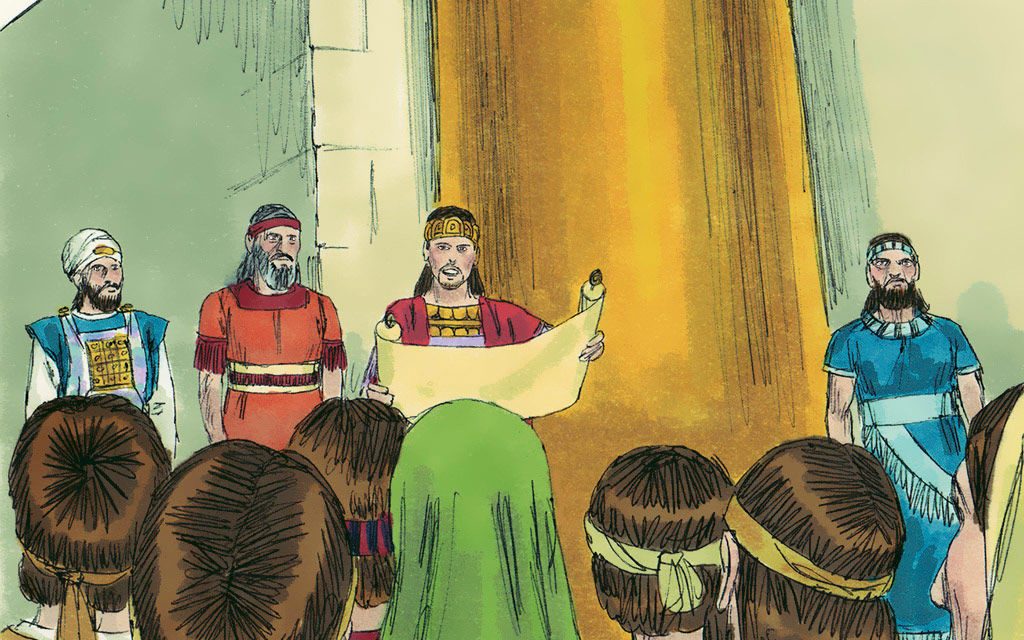
Following this he called all the people of Judah and read the words of the Book to them. He made a covenant (promise) and the people along with him, to keep the perform the words of the Book of law. Throughout his lifetime, the people did not turn from doing what was right before God. This shows the influence that a good, strong leader can have on their people.
Josiah instigated the celebration of the Passover which presumably had not been done since his great-grandfather celebrated it many years prior. Like Hezekiah, he united Judah and Israel in the celebration. He followed the guidelines for Passover to the letter and Bible records it was one of the best Passovers ever. There had been no Passover like it since the days of Samuel the prophet (about 600 years prior 😮😮 )! What a man!
Josiah was phenomenal as a king. He cleansed the nations of Judah and Israel; repaired the temple and celebrated one of the most memorable Passovers in the Bible. He was one of the greatest kings of Judah however he died relatively young. There is some suggestion (2 Chronicle 35 vs 20 – 27) that his death was untimely. He went to fight with the Pharaoh of Egypt and was rebuffed. This pharaoh had been sent on a mission by God (I know right?! He can use anyone!!) but Josiah was interfering in the execution of this plan. Pharaoh Neco told him to return home but he did not and sustained mortal injuries in the war. He subsequently died in Jerusalem.
One question I had whilst reading this passage is (I’m afraid (or not) that I don’t have the answer, just more questions for you to ponder):
Who took care of or advised him in those early days?
He certainly had no shining example from his dad. He would have been very little (6 years old) when his grandfather died. Was he aware of him turning to God? Was he perhaps influenced by his grandfather? Did he draw parallels between the life his father lived and the death his grandfather died and choose the former? Some scholars have suggested that he must have had a devout mother who influenced him to be a good, godly king. While that is a nice sentiment (go mama 💁♀️💪🏼), this is speculation as there is no evidence to support this (none that I have found)!
Right! Take a big sigh. We’re almost there! I did warn you ha-ha. If I’ve not lost you already, then well done and keep going 😊
Learning points
Circumstances do not have to determine character. Regardless of what circumstances we face, we can decide to do the right thing. This is not a guarantee of an easy life. I can’t imagine that such a young king as Josiah was would have found it easy to completely change the religious and moral code of a nation. However, he went on to do it, taking all the time he needed to do a good job.
Don’t be in too much of a hurry. Sometimes we like things to go quickly, tick a box and move to the next exercise. However, that sometimes impacts negatively on the quality of said exercise. Allow things to take as long as they take. This is not excusing laziness (I’m about to fall off this table!!) or being sloppy. It’s highlighting the fact that some things do take time and when they are rushed, things might go wrong later on.
Say no to complacency. Josiah was anything but complacent. He took the things of God seriously and was always ready to do the next thing that needed doing. Whenever he developed more insight, he put it to action. He did not rest on his oars and ‘leave things for the next generation’ to do.
Be proactive – when he had insight, he did not pontificate about the Book of the law. He received insight, had Eureka moments and followed up with actions.
Last but definitely not least! YOU can make a difference. You can BE the difference. Things do not have to continue the way they’ve always been, especially when they’ve been wrong. Even if the task seems mammoth and daunting, break it down into little achievable chunks and get to doing! You might not be able to achieve everything you set out to do but at least you make a dent in it. You start something and change the narrative. You never know who might be inspired to pick the baton and continue where you stopped! Much later, after being exiled, some Israelities returned to their native land with Ezra. Ezra in Josiah-esque style read the Book of the Law to the people, reinforcing the importance and intrinsic nature of the word of God to his people.
You made it! I am sending virtual hugs.
Thank you for being a part of this series. I have enjoyed sharing my musings with you and I hope it has caused you to think or raised questions in your mind.
I have enjoyed writing this series and hopefully there will be more to come in future 🤷🏾♀️🤷🏾♀️
It’s never too late to share with someone, like or (re)read the series!


 Breathe