New year, new …

Hello hello, hello.

Happy New Year! It’s not too late is it 🤦🏽‍♀️

I hope you’re settling in the new year very well … and remembering to write the right date 😂😂 I remember my first few days back at work after the holidays,  I lost track of what day I was on. The holidays completely scrambled my sense of time and I really didn’t want to go back to work but needs must! 🤷🏾‍♀️

The New Year buzz and excitement is starting to ebb and soon (unfortunately), a lot of new resolutions are going to start falling by the way side, long forgotten by the time we get to January 31st! Still can’t believe that’s tomorrow!

I’m not really one for new year resolutions as such. However I  do like to make a list of things I’d like to achieve in the year because to fail to plan is to plan to fail. I’d love to say my goals are SMART goals and they’re all mapped out really clearly … but that would be a lie 😂😂 That’s definitely something I can improve on… having SMART goals.


I’d like to share my thoughts on planning for this new year.

1. Set yourself some goals. They don’t have to be formal goals or written in a formal sense. Just think about where you want to be at the end of the year. How do you want to improve on yourself? Think about different domains of your life e.g. spirituality, relationship with others, relationship with yourself,  finances, etc.

2. Document these goals. Put pen to paper … fingers to screen/keyboard… it doesn’t matter  but make sure you make a note of your goals.  The faintest pen(cil) is better than the best memory.


3. Find a balance between being realistic and challenging yourself. This is easier said than done. However it is important to consider. You don’t want to set such unrealistic,  nigh-on-impossible to achieve goals that you get to the end of the year and all you’ve got is a heart full of regret and a gaggle of half-baked, abandoned projects. Be ambitious but don’t set yourself up for failure.


4. Share your goals with people who love you and have your best interest at heart. This does not necessarily translate to sharing all your dreams with one person. It might be that you share different goals with different people who can encourage you,  hold you accountable and share that journey with you.


5. Have fun! Try something new whether that’s a new dish, new artist,  new genre, activity, whatever. Life might you down sometimes but determine within yourself that as much as lies within your power,  misery will not be your companion this year! I reject it for you! Goodness and mercy will run after you every day.

So that’s it from me as an introduction (albeit belated) to the new year and decade.

As a reminder of what to expect from the blog. There will be monthly posts every last Thursday of the month. Some months I might decide add on a special so watch this space!

Also I plan to have more posts on mental health topics this year. If there is any particular ones you’d like some information on, please post a comment or send me a message.

I hope you have a beautiful, fulfilling year and decade. May you enjoy good health and peace this year. I hope we have an amazing time together this year 😊😊

A Tale of 4 Kings – Part 4

Hey guys 😊 Apologies for the lateness of this post; some unforeseen circumstances came up 😐 I can’t believe we’ve come to the last part of this series 😯 I hope you have enjoyed the series. If you’ve missed any of the posts, please have a read on the blog to catch up.

I’ll include a quick family tree/timeline of the kings and then we’ll get right into today’s post! Today’s post is another long one because we’ve got to finish with a bang!! 😂😂 no really because there is so much going on. So, get yourself a drink **insert nice treat**


zedekiah fam


Josiah (2 Chronicles 34 – 35; 2 Kings 22 – 23:30)

Enthroned – 8 years old
Tenure – 31 years
Death – Died in battle

josiah child

Josiah was only young when he started reigning (probably due to the untimely death of his father). Interestingly, he is deemed one of the best kings of Judah and he followed in the footsteps of his great-grandfather. He walked in the ways of David his father (ancestor going way back). This comparison to David is quite high praise because David is THE known king of Israel.

Interestingly, a prophet had prophesied about Josiah about 300 year before his birth (1 Kings 13 vs 1 – 3). He was mentioned by name as the one who would essentially bring about spiritual reform. This begs the question of how much the prophecy influenced the Josiah we see in the bible and how much of it was his own heart? We’ve spoken about this concept in one of the other posts – destiny vs choice.

When he was 16 years old, after reigning for 8 years, he started seeking God. In the same year his first son (Shallum a.k.a Jehoahaz) was born. I’m unsure whether these two incidents are linked. Four years later he started a religious detox of Judah. He got rid of the idols, altars, everything that signified idolatry. He had these things ground to powder such that they could not be easily recovered and scattered the powder. He was very serious about this and did a thorough job which took years, seven whole years trying to undo a lot of the damage and infrastructural malpractice of religion in Judah and Israel. He actually left Jerusalem and went to Israel to make changes there as well. In many ways, the state of affairs in Israel was more dire. They had more bad kings than good, hence the punishment of God came down hard on them much earlier than Judah. He was not concerned only for his “little” corner of the world but sought to bring God’s truth to his sister nation (Israel).

josiah cleanse

When he was 26 years old, he instructed top government officials to repair the temple. After wrecking several parts of the temple, coupled with general disrepair from poor use over time, the temple was probably in a bad state. During this repair process, some of the priests found the Book of the Law which was like their code of conduct as a nation, but so much more. It signified the connection they had to God. I find it interesting that by the time the Book of the law was found, he had already done so much with and for God. Makes one wonder what resources he was using prior to the discovery or whether he was using any literature resources or relying on the human, anecdotal, oral narration of the priests or whoever.

Anyway, when the Book was found, he was very sad and tore his clothes which was quite commonly used to express distress and grief in those days. His heart sank when he saw how far from God’s standard the people had been. Although he had already done a lot to rectify the situation and bring the people to God, he was still saddened that there were things yet to be done. He was not complacent. He did not think –

“Oh well I’ve already done my bit. We’ve got rid of the idols. This bit is just the cherry on top”.

He took the things of God very seriously.

huldah_copy

He asked the officials and the priest to find out what God’s thoughts are concerning Judah and Israel, considering the fact they strayed far off the path he had set them on. These men went to see a prophetess (Huldah) to get her opinion. She explained that God was indeed upset with Judah and would bring his judgement upon them. However, due to Josiah’s repentant heart and desire to please God, the disaster to come will not start in his days.

Going off on a tangent slightly but we need to talk about Lady Huldah! Huldah was clearly revered as a prophetess and her ‘office’ was significant enough for these top officials to consult her. She’s a woman who otherwise is not mentioned in the Bible but what powerful representation of all that women did even back then and what we do today, everyday! Jeremiah started his ministry (service) as a prophet 5 years before this call to repentance. It is interesting that they did not go to Jeremiah. Was he possibly viewed as “up and coming” prophet? I don’t know but I am super stoked that they went to Huldah.

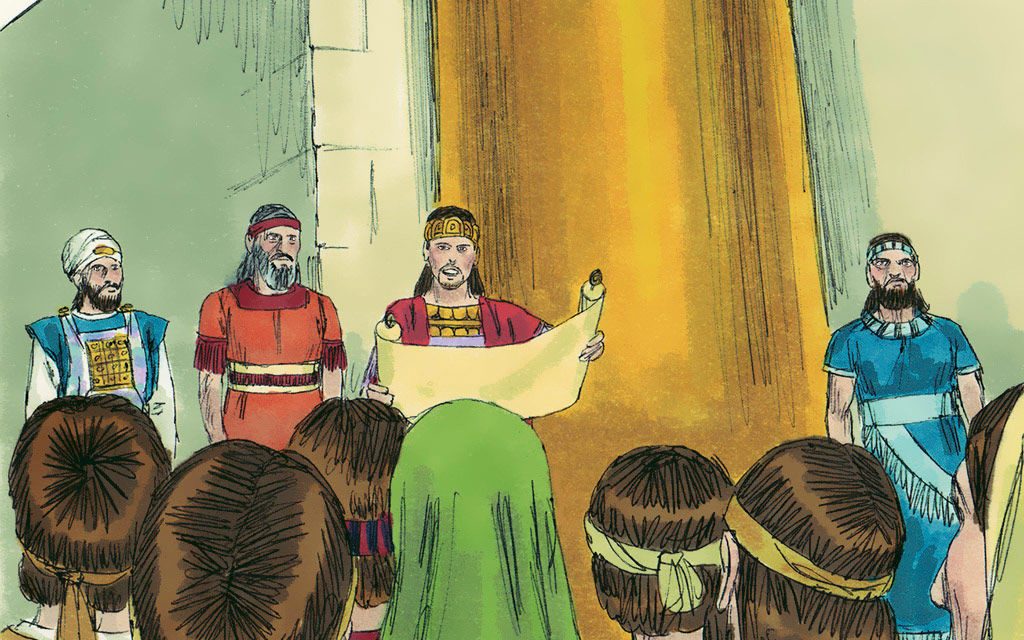
Following this he called all the people of Judah and read the words of the Book to them. He made a covenant (promise) and the people along with him, to keep the perform the words of the Book of law. Throughout his lifetime, the people did not turn from doing what was right before God. This shows the influence that a good, strong leader can have on their people.

Josiah instigated the celebration of the Passover which presumably had not been done since his great-grandfather celebrated it many years prior. Like Hezekiah, he united Judah and Israel in the celebration. He followed the guidelines for Passover to the letter and Bible records it was one of the best Passovers ever. There had been no Passover like it since the days of Samuel the prophet (about 600 years prior 😮😮 )! What a man!

josiah passover

Josiah was phenomenal as a king. He cleansed the nations of Judah and Israel; repaired the temple and celebrated one of the most memorable Passovers in the Bible. He was one of the greatest kings of Judah however he died relatively young. There is some suggestion (2 Chronicle 35 vs 20 – 27) that his death was untimely. He went to fight with the Pharaoh of Egypt and was rebuffed. This pharaoh had been sent on a mission by God (I know right?! He can use anyone!!) but Josiah was interfering in the execution of this plan. Pharaoh Neco told him to return home but he did not and sustained mortal injuries in the war. He subsequently died in Jerusalem.

One question I had whilst reading this passage is (I’m afraid (or not) that I don’t have the answer, just more questions for you to ponder):

Who took care of or advised him in those early days?

He certainly had no shining example from his dad. He would have been very little (6 years old) when his grandfather died. Was he aware of him turning to God? Was he perhaps influenced by his grandfather? Did he draw parallels between the life his father lived and the death his grandfather died and choose the former? Some scholars have suggested that he must have had a devout mother who influenced him to be a good, godly king. While that is a nice sentiment (go mama 💁‍♀️💪🏼), this is speculation as there is no evidence to support this (none that I have found)!

Right! Take a big sigh. We’re almost there! I did warn you ha-ha. If I’ve not lost you already, then well done and keep going 😊

Learning points

  • Circumstances do not have to determine character. Regardless of what circumstances we face, we can decide to do the right thing. This is not a guarantee of an easy life. I can’t imagine that such a young king as Josiah was would have found it easy to completely change the religious and moral code of a nation. However, he went on to do it, taking all the time he needed to do a good job.
  • Don’t be in too much of a hurry. Sometimes we like things to go quickly, tick a box and move to the next exercise. However, that sometimes impacts negatively on the quality of said exercise. Allow things to take as long as they take. This is not excusing laziness (I’m about to fall off this table!!) or being sloppy. It’s highlighting the fact that some things do take time and when they are rushed, things might go wrong later on.
  • Say no to complacency. Josiah was anything but complacent. He took the things of God seriously and was always ready to do the next thing that needed doing. Whenever he developed more insight, he put it to action. He did not rest on his oars and ‘leave things for the next generation’ to do.
  • Be proactive – when he had insight, he did not pontificate about the Book of the law. He received insight, had Eureka moments and followed up with actions.

josiah scroll

  • Last but definitely not least! YOU can make a difference. You can BE the difference. Things do not have to continue the way they’ve always been, especially when they’ve been wrong. Even if the task seems mammoth and daunting, break it down into little achievable chunks and get to doing! You might not be able to achieve everything you set out to do but at least you make a dent in it. You start something and change the narrative. You never know who might be inspired to pick the baton and continue where you stopped! Much later, after being exiled, some Israelities returned to their native land with Ezra. Ezra in Josiah-esque style read the Book of the Law to the people, reinforcing the importance and intrinsic nature of the word of God to his people.

You made it! I am sending virtual hugs.

Thank you for being a part of this series. I have enjoyed sharing my musings with you and I hope it has caused you to think or raised questions in your mind.

I have enjoyed writing this series and hopefully there will be more to come in future 🤷🏾‍♀️🤷🏾‍♀️

It’s never too late to share with someone, like or (re)read the series!

A Tale of 4 Kings – Part 3

Welcome to the third post in this series. I hope you’ve enjoyed the first two posts. If you’ve not seen the first two posts, please have a look on the blog.

Let’s get right into today’s post!

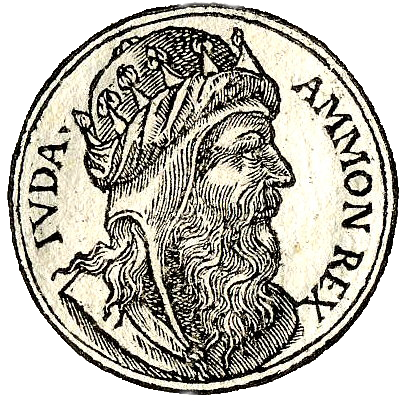
Amon_rex
Amon (2 Kings 21: 19 – 26; 2 Chronicles 33: 21 – 25)

Enthroned – 22 years old
Tenure – 2 years
Death – Assassinated

I think it’s worth mentioning that there is a very limited amount of information on Amon in the Bible; as such this post will be looking into the impact of his ancestry on his short life and what we and learn from that.

For the short period that Amon reigned as king, he was not a very good king. He followed the behavioural patterns he had seen in his father for most of his life. He worshipped idols and refused to follow the ways of God.

Presumably for most of his life, he witnessed his father’s tyranny to his people, his siblings and indifference to God.

Interestingly, he did not learn from his father’s conversion experience. I do not know what conversations were had or perhaps if any conversations were had regarding his father’s experience. Did Manasseh try to warn him to mend his ways? Did he leave him to his devices?

He decided to try to out-do his father’s evil deeds and unfortunately that did not end well for him. His own officials conspired against him and assassinated him in his palace. Begs the question of what kind of king they thought he was, probably not very highly esteemed.

His father’s (Manasseh) conversion was not enough to undo the destruction God has promised to Hezekiah’s (his grandfather) generations. Amon also did nothing to try to stave off that impending doom that was surely on the horizon following Manasseh’s capture. Did he perhaps resign to his fate and think “oh well we’re all going to be destroyed, might as well go down swinging” (which was like his father’s attitude initially, See Post 2).

Some scholars (and Jewish apocrypha) believe Amon thought he could do things like his father, that is, he planned to cram in all the evil deeds he could and when he was old, he would ‘repent’ and turn to God and things will be alright (eventually). However, this was not how things went. His assassinators did not get the memo! We can learn from this that we cannot and should not postpone doing the right thing. We do not know what the future or even tomorrow holds. We cannot plan to repent or be good tomorrow; tomorrow is not guaranteed. If you know you’re doing something wrong or God has asked you to do something, get to action. Don’t delay, not from fear or doubt or anything else!

Amon assasinated

This story of Amon does make me think. The decisions we make and the behaviour we display might cause more enduring problems for others, even though we can rectify them for ourselves. That’s why the Bible asks us to be careful what we do. If we think something we are doing might cause someone else to sin or might be injurious to someone else’s (Christian) journey, then kindly refrain from doing it [1 Corinthians 8:9, Romans 14: 2, 13. People’s lives are fragile and yet very important.

I remember once when I was younger, I used to read Mills and Boons (romance, erotic fiction etc) {and for some people that’s not a big deal} and whilst it did not completely seat well with me, I carried on. I read other genres as well so that did not constitute the entirety of my reading repertoire. By association and probably because they were available, one of my friends (who actually wasn’t much of a reader) started reading these books as well. I tried to dissuade her, but it is difficult to dissuade someone from doing the same thing you’re doing (HYPOCRISY at its peak!!). Anyway, some years down the line I realised I had to stop reading these books and so (with some difficulty), I stopped reading them. I hoped my friend would also stop and tried to convince her to give them up, but I could not. Now this is perhaps a simple example but really, we need to be careful what we expose people to because even if we might get free from whatever the habit it, they might not be so ‘lucky’. In stead of erotic fiction, it might be porn, substances such as marijuana, cocaine, **insert other harmful substances/behaviours**. Please speak to someone who cares about you and will help you. It IS possible to be free from anything that plagues you! It might be hard, but it is possible.

all things are possible

References

http://gallery.euroweb.hu/html/m/michelan/3sistina/6lunette/07/lu07hez.html, Public Domain, https://commons.wikimedia.org/w/index.php?curid=48195114

A Tale of 4 Kings 2 – Manasseh

Hello, hello! I hope you enjoyed the first post in this series. I know it was quite long so well done for reading it to the end … because you did right 😏😉 haha. If you did not, I’m not judging you but no time like the present eh? You’ll be glad to know that was the longest post for this series, all others will be much shorter, this one included. So, let’s crack on!

Manasseh (2 Chronicles 33 vs 1 – 20; 2 Kings 21 vs 1 – 18)

Enthroned – 12 years old
Tenure – 55 years
Death – natural

Manasseh was the son of Hezekiah who succeeded him as king. He started off being a pretty bad king and undid a lot the good that his father had instituted in the land of Judah. He killed lots of people (purportedly including Isaiah the prophet1 who served in his dad’s era) and consulted witched and mediums. He subsequently repented and turned to God.

008-king-manasseh

Circumstances of his repentance

He was captured by the Assyrians and taken to Babylon (about 1, 000 miles away) in chains. They put a ring in his nose 😢😱😱 He got a huge serving of humble pie and turned to God in this time of distress 🙇🏼‍♂️🙇🏼‍♂️🙇🏼‍♂️. God was moved by his request🤯🤯 (It’s a good thing I am not God 🙈🤦🏽‍♀️still working on understanding justice and mercy; #thisjourneycalledlife #growing #careaboutthejourney). He was taken back to Jerusalem and THEN he realised that the Lord alone is God (2 Chron 33 vs 13).

On his return to Jerusalem, he got rid of the altars for the idols and restored the altar of God in the temple. The people continued to make sacrifices at pagan shrines, though they were to the Lord.

Points

  • Formative years

He must have grown up during the extension (extra 15 years) of his father’s life. This was the era where his dad did not appear too bothered about God (all speculation) and Manasseh might have picked up on that. Also, Hezekiah did not appear concerned about the fate of his generations. Could Manasseh have rebelled as a result? Did he perhaps think, “we’re screwed anyway, might as well go all out!”

I think his upbringing did have an impact on him. I tried to investigate whether Hezekiah had other sons, but nothing was forthcoming. I’m unsure of what the impact of (potentially) being the only son had on Manasseh’s personality and character.

In essence, children learn largely by observation (at least in the initial periods) so they pick up nonverbal cues from those around them. We need to be careful how we act around children. What example are we portraying? You can tell a child not to do something till you’re (or they’re) blue in the face but if your actions don’t line up with your words, you best believe you are wasting your time. Be the person you want them to be.

manasseh repents

  • Repentance

He sincerely repented. Unlike his father (latter part of his life), he recognised the truth, realised the impact his actions had on himself and his kingdom and he repented. Many of us, myself firmly included, would question this hardship-induced repentance and conversion. However, as the Bible says in other parts (Psalm 44 vs 21; Jeremiah 17 vs 10), God knows the heart of man. We can only cast aspersions and speculate but God saw the real state of his heart and took him back. Manasseh really did try to undo some of his previous damage by destroying the altars and idols he built. He worshipped God at the end of his life. I’ve been unable to find out the time interval between his conversion and when he died. I wonder if he had enough time to properly fix some of the issues he had caused.

I’ve always wondered about predestination vs human choice. I used to think if God has decreed a certain thing then surely human are helpless to change the outcome of that. However, Manasseh repented. I did not see it happening. I think it changed the narrative temporarily and showed God’s flexibility and ultimate goodness.

In conclusion, it is ironic to see Manasseh’s life take the opposite pattern of his father’s where he starts off being tyrannical and ends up doing things God’s way. There are questions over the impact of his upbringing on his character and also how much time he had to repair the damage he caused and indeed whether his ‘repairs’ had any lasting effect on his people and his kingdom. For me, this story also raised the issue of pre-destination vs free will (human choice) and teaches me that we (almost) always have a choice to make between our own way and God’s way.

  1. Manasseh By Mary Jane Chaignot https://www.biblewise.com/bible_study/characters/manasseh.php

A Tale of four kings – Part 1

As I hinted in my last post, this new series is going to be about a family. I am going to briefly discussing four generations of this family and examining each person in turn. There will be weekly posts for the next four weeks.

The family is a lineage of kings in the Bible [but I think everyone can (hopefully) identify something they can relate to … so, if you’re not religious, this is not your cue to leave 😌]. They are kings of Judah, the southern kingdom, who lived eons of years ago. The first king we will be looking at is Hezekiah.

King Hezekiah – Patriarch

Enthroned – 25 years old
Tenure – 29 years
Death – natural

I am starting with Hezekiah because I’ve chosen him as the patriarch of this family. I found his story quite interesting whilst reading in the book of 2 Kings chapters 18 – 20 and 2 Chronicles chapters 29 – 32.

Side note – the books of Kings and Chronicles tell the same stories from different perspectives; so, many times they complement one another.

Background

Hezekiah was a good king, a much-needed respite from the spate of bad kings of Judah who had led the people away from God’s ideals. These kings had introduced idol worship and had substituted God for lesser gods who they looked to for their needs. Obviously, God was not happy about this and had been warning the people, through his prophets, to change their ways.

He was revolutionary from the kings who were before him and basically went on a rampage destroying and trying to undo all the damage they did. He actively took on the existing, warped religious system which would have taken a lot of courage. He destroyed many of the altars and tried to set things right according to God’s standard. He did such a good job that the Bible says, “there was no one like him among all the kings of Judah” (2 kings 18 vs 6); he was in a league of his own.

He faced some terrifying times when a foreign king tried to lay siege to Jerusalem (his capital) as well as other cities of Judah. After trying to sort things out on his own (and failing woefully), he asked God for help and God got rid of the bad guys for him.

Around this time, God gave Hezekiah a heads up that he was going to die and basically told him to put things in order (aka do the needful 😅😅). Hezekiah wasn’t ready to die so he asked for an extension, a new lease of life … interestingly, he was granted it. He got 15 (yep that’s right FIFTEEN) years extra.

Hezekiah and prophet

During this time, he made the mistake of showing some foreigners (with questionable motives) his treasures, every last one of them. God had intentionally withdrawn from him to “see what was in his heart” and his actions portrayed elements of self-sufficiency, considering all he had been through with God and come through.

I’ve got some ideas from reading around on the matter.

  • Pride: perhaps he thought to himself that he had overcome both death and war and damnation from his enemies. So, he wanted to show off his majesty and splendor to his visitors.
  • People-pleasing – he might have wanted to impress his visitors (Babylonian) and how relevant he was. The visitors potentially wanted an ally in him and showing them his treasure was perhaps a way of indicating that he would be a good ally and had many resources at his disposal. Ironically, in later generations, the Babylonians captured his son and other generations of Judah and they were exiled.

Back to his mistake, God was not pleased with him, so he sent him a message stating that Judah was going to be destroyed. The people would be captured and taken as exiles to a foreign land. Now back in those days, this was a terrifying prospect. It was not going to be a nice holiday to another part of the world. They would most likely become slaves (even if they became high level officials), they were none the less slaves. This would cause many problems for the people of Judah, such as language barriers, cultural barriers and there were no (perhaps few) human right activists in those days. So, it looked bad all round. Considering how vigorously Hezekiah had opposed and sought help to be free from the previous oppression, he was apathetic about this newly predicted impending doom. As long as he won’t be affected personally by the hardship to come, he was not bothered!

Points

  • Do we really need what we want?

Hezekiah did not want to die and that’s not a bad thing. Most of us don’t want to die yet, if given the option. I’ve previously and even now still pray for people to be healed and life to extended/renewed. When people die, it’s a sad moment and sometimes we ask why and just can’t grasp how someone so good and kind dies presumably before their time.

This story is making me reconsider my approach. Hezekiah wanted more time and yet that extra time he had cost him and indeed his generations a lot. He could have died with his good name and works intact and yet he chose what seemed good.

Sometimes what we think we want is not what we actually need nor what is good for us. Sometimes we pray fervently for someone to be healed and their life extended and yet we do not know why that situation is occurring in the first place.

The sickness he had was not as a result of sin or from the devil or anything like that (as far as I can tell). We are so quick nowadays to view illness or problems as a punishment from God, attack from the devil or consequence of sin. What if it’s none (not always) of those things? How about if we ask about the purpose of the situation?

Am I saying we should never pray for healing (or other situations)? Definitely not! We know that one of the reasons Jesus died was to restore our health so we can ask God for healing. However, it is important to ask and try to clarify what the purpose of that particular situation is. What is God trying to teach me through this experience, as unpleasant as it may be.

When my aunty died, I was absolutely heartbroken. I had so many hopes and dreams for her that were not realised and my heart ached. However, even though my heart aches when I think of her, I know that this happened for a reason. I do not know what the reason is, but God knows. If it was better for her to go than for her to stay here on earth, then I’m fine with that. It’s hard pill to swallow but swallow it I must.

  • Selfishness has consequences

Selfishness may not seem to cost us anything because after all we get what we want right? Wrong! There’s always an aftermath for every decision we take. For every action, there is an equal and opposite reaction (Newton’s third law of motion).

I’m not sure what other reasons there might be for his apathetic reaction to God’s judgement for his descendants and for Jerusalem, his beloved city.

  • Recognise –> Realise –> Repent

It is not enough to recognise what has gone/been done wrong. We must also realise what the implications of our actions. We must realise and seek to understand the whys. Only then can we truly repent and seek forgiveness from God.

To repent is to do a full 180° (or whatever angle you chose as long as it’s not 360° 😅) and go the other way, the better way.

These are some of the things that I have learnt from Hezekiah’s life. They are MY opinions and one of the free things in life is our opinions. You might disagree with what I’ve written but I hope this has got you thinking a little bit.

If there are other things you’ve noticed please share in the comments below.

Blugdate – blog update

Hey guys🙋🏽‍♀️🙋🏽‍♀️I know it has been forever and I wish (Oh I do 😩) that I had the perfect excuse but sorry to disappoint. There are reasons, some more valid than others, regarding why I have been AWOL but at the end of the day, they are all excuses and for that I apologise … sincerely 😢 I’d love to promise that this will never happen again but I don’t like break

ing my promises.

Never the less, I’d like to explain or at least share some of my reasons with you so that you understand me better as a person, warts and all.

1. I am a bit (depends on who you ask 😏) of a perfectionist. As such I love things to be a certain way (perfect 😂😂) when I present them to you. This means a lot of effort goes into what I put out there (as it should 😉). This also means that sometimes I find that process overwhelming. And the mere thought of going over things puts me off.

This leads nicely to the next point which is very deep and profound.

2. Sheer laziness … 🤫 I know you guessed it LOL! I can be quite lazy sometimes and when you’re already overwhelmed by the amount of work you have to do to make something just right, laziness is just the enemy. I’m sure many of us can identify with having a busy work/uni/**insert daily activities** life and by the time I get back home, I just want to put my feet up, snuggle under a nice blanket and do nothing. This is no good for having a blog that needs content putting out 😅😅

3. Procrastination… this is the first cousin of laziness and perfectionism or maybe its the product of them🤔🤷🏾‍♀️ I don’t know but they all belong to one big, unhappy family. Due to above mentioned points and the law of self-preservation, I decide I can always do things tomorrow or whenever I ’ve got more ginger/inspiration/time/**insert excuse of the month**

Anyway I’d say those are some of the main reasons why ive been MIA. Now I’m back and better (hopefully).

Here are some of the things that pushed me out of my “stupor”.

1. My own consciousness that this blog is my baby and I need to show it some love

2. My friends checking up on me and asking what’s happened with said baby

3. The end of the year looming ahead of me … asking me ‘What have you fone with your blog this year 🤔😯😒

I’d say of these three things, number 2 was probably one of the key factors that pushed me to give myself a short(ish) target and work towards it.

In terms of what comes next, I’m going to be putting out a short series about an old family (all will be revealed inndue course) and looking at someone from each successive generation. I’ll be looking at some of the things they did and discussing how their ancestors might have influenced them. In essence, it is an exploration of how family impacts on who we are and the decisions we make (in a manner of speaking). I hope you do enjoy it and perhaps learn something from it.

Glossary

AWOL – absent without leave

Ginger – now this is harder; nope not the fruit or whatever class it is. It’s a slang word for motivation.

MIA – missing in action

Charity begins at home


I love God
I’m devoted to him
Wholeheartedly
Anything I’ll do for him
Anything.

I feed the hungry
Help the needy
Carry the burdens of brethren
Visit from home to home
Making sure everyone is okay
Well, everyone except my family
They by default have to be okay.

Being there for them
There with them
That can wait
Ranks low on my hierarchy of important things
Because they are strong.

My wife knows I love her
Sometimes I remember to tell her
But I’m busy with the work of God,
Raising funds for the women’s conference
Doing good deeds
She understands
Surely she does.

My kids
I constantly pray for them
They’ll make it through alright
God will watch over them for me
I’ve got my hands full dealing with His children.

My parents
I know they’re proud of me
They understand why I’ve not called in months
I’m sure they love the house I built them
Never mind I’ve only been there once
On and on the excuses go
Bolstered by an erroneous sense of being indispensable.

If we fail in loving those around us
Those closest to us
How can we effectively love others?
Love by doing
Love by being

Talk is cheap
Your façade won’t last forever
It’ll come crumbling like a pack of cards
Sooner or later
Your family won’t be there forever
Their patience and love aren’t limitless
Don’t be too busy to love those around you.

20190531_000147_00013587077736564125508.png

Rights and rites

Aloha! Hope this blog post meets you at the right time! Let’s delve right into this juicy topic that gets me all worked up and going from 0 to 100 at the speed of light … okay maybe not that fast haha!

I read an article a while back (pretty rubbish if you ask me) about the expectations people have about dating. Unfortunately, I can’t remember the title or anything.They gave some cases where boy meets girl and they decide to meet up or start a relationship. However, the girl (ALWAYS 🙄) always expects the guy to basically take on the role of provider. In one instance, the girl brings many people on the date and expects the guy to pay for all of them! Like really?! Anyway, tonight I want to talk about some of these scenarios *in Falz voice* (If you do not know Falz, stop reading and check him out on YouTube … then come back 😉).

Disclaimer – I am not having a go at anyone. No one annoyed me. If you find yourself on this table, it will vibrate till you fall off so just climb down now 😅😅

Date – Bringing a plus x (1 – ∞ (infinity 😉 you’re welcome)

First of all, this is just wrong! Why would you bring loads of people or even anyone to a date someone has exclusively invited you to? If the thought pops into your head, it is a matter of simple etiquette to inform the person who invited you and ask their permission before you turn up with your squad and make a mug of yourself. I personally think it is very impolite to bring extras to a date, especially when you have not informed the other party; more so on a first date (on any date even *side-eye*). I’m not sure why people think it is a good idea and I’m very happy to hear their side of the story (honestly). If it’s a case of not being sure about the person’s motives or whatever, like I said earlier, it’s always better to inform them beforehand before springing a (nasty) surprise on them.

Date – ordering more than you can afford

This is a no-no. scrap that. NO-NO! thou shalt not do this. It just makes me really uncomfortable. Never, ever think it’s your God given right that the person who invited you out MUST pay. Always come prepared with your own money and only order what you can afford with the resources you have (By resources I’m not including your hands for washing plates *laughs in capital letters*)! If you are greedy and order expensive things, that you normally won’t buy for yourself, and the guy decides not to pay, how ashamed will you feel? (Like honestly) Some people might say if someone can’t afford everything on a menu, they should not invite you to such a place. Maybe, maybe not 🤷🏾‍♀️ but you too, some self-respect won’t go amiss here. Also, I should add, if you’re going to invite someone out, make sure you have enough money to provide for both your meals. It doesn’t mean you necessarily have to pay but I think it’s the polite thing to do. Even if the date was horrible, be the bigger person and pay but obviously that’s just my opinion.

Relationship – Maintenance fee (are you a machine or a service? 🤔)

This particular one makes me sad inside. Why should someone pay you to be their significant other? I’m not talking of marriage here (Not that you should be paid for getting married to someone, topic for another day ha-ha, let’s not get carried away). Why should your boyfriend or girlfriend pay you? Let me clarify things a little. Boy meets girl. They like one another and start a relationship, with mutual agreement. Girl/Boy subsequently expects ‘up-keep’ money or an allowance from the other person (beht why) because they need stuff? I think that’s wrong. Now if there is an obvious need and one person has more expenses than the other, it’s sensible that they help the other person. This is not a right, it is not a responsibility, it is ‘sensible’. If he gives you money one month, or she bought you a gift the other day, that does not translate to a regular pattern of giving money or gifts. I am a strong believer of living within your means. Cut your cloth according to your coat! If you can’t afford it, learn to do without it. If you get it per chance, then that’s nice. If you don’t, life goes on. Forget the ‘status quo’. No one should determine what car you drive or what bag you carry or whatever else you think is a reflection of how ‘well’ you’re doing in life. I’m not saying don’t be ambitious. No, be very ambitious and always strive to be a better version of yourself but do it respectfully, not by sponging off others. Haunty *in Jenifa’s voice*, it is not your birth right for your boyfriend to give you a monthly allowance. Huncle (I did not forget you), It is not your birth-right for your girlfriend to buy you expensive perfume (LOL) or give you sex in exchange for gifts or money. Let me quickly move on before I shake this table too much! 🙊🏃‍♀️🏃🏾‍♀️🏃🏾‍♀️

I think these three are enough fodder for today 😥😰 A common thread/theme in these examples is self-respect. I think respect is very important in building our self-esteem (self-image) and our relationships with others. If you respect yourself (adequately), I believe you won’t put yourself in a situation where you are vulnerable, or someone is able to bring shame on you. You would also treat other people with respect by not stepping on their toes and just being ‘generally sensible’. I don’t think people should use any of these three scenarios as a ‘test’ or rite of passage for a potential partner, to assess their commitment. It just might backfire! A word is enough for the wise (😂😂 I laugh a lot, maybe too much 🤔).

So, tell me … what are your thoughts? Do you think I’m talking absolute balderdash? Being too harsh? Unrealistic? Whatever? Please tell me in your comments and share this with your friends. Talk about it, hear other people’s views on this matter!

Being a woman …

Sorry guys 😦 I know it’s been a minute … or two … or 2 months LOL! I wanted to put a post out last month but it was not ready in time and I just kept procrastinating *🤦🏽‍♀️* Anyway, we’re here now. This is the post that was meant for last month. Enjoy!!

Last month we celebrated International women’s day and Mothering Sunday (in some parts of the world). I’ve also celebrated my mother’s birthday as well my godmother’s. So I am writing this article for all the women out here #dasright

This article is not ignoring or denying the fantastic and admirable things the men in our lives do. This is not emasculating men. It is focusing on the women, simples #okay #onyva #letsgo

First of all, to all the women who go out there and get things done, I applaud you.

Those who feel less than, I encourage you.

To those who are struggling, I remind you that Rome was not built in a day… keep pushing.

To those in dark places, I pray light finds you.

Woman, you are strong, you are resilient, you are a treasure!

You're awesome, dad! (1)

In this article, I’m going skate over two themes briefly; the first being what success means as a woman and the second, women supporting women.

What makes you a woman? Is it just your physical body, boobs etc? Your hormones? Biochemistry? Your emotions? The role(s) you play? I think it’s a bit of everything. If I decided to have my boobs cut off (which I do not #breathe #fictitious #example), it does not make me less of a woman. If you decided you did not want children, that does not make you less of a woman. Never let anyone make you feel less than or incomplete as a woman or a failure because you have done certain things or not attained certain ‘landmark’ achievements. Think about what is important to you, your identity, what makes you you. What is your purpose? How will you achieve it? Break it down into little steps and go out there and do it! I am not saying I have life and everything it entails figured out to a T. I am very much on this journey like anyone else but I hope sharing my musings can perhaps trigger some thoughts of your own.

To me, success as a person, as a woman, is achieving your purpose. A quote I saw recently resonated with me and I’d like to share it with you.

The person doing the most with what he’s got is truly successful. Not the one who becomes the richest or most famous, but the one who has the closest ratio of talents received to talents used.

As women (and people 😉 ), we are all at different phases and stages of life. For those who have already gone through a particular phase, we should understand some of the challenges those coming behind or currently in that phase are facing. The challenges may not be identical but there will be similar themes. As such, we should support one another and offer our advise… not your commandments or the rules to be adhered to #thoushaltnot #dosanddonts.

Sometimes we are our own worst enemy. We criticize, condemn, discourage and malign one another and wonder why men don’t stick up for us (I am not exonerating them of blame when it’s theirs). We can’t continuously blame others for all our problems. If we supported one another better, I believe life will be more enjoyable and less stressful for many of us. This does not mean life will be smooth sailing and all our problems will suddenly disappear #iwish #tooright. However, this also does not mean we can never tell people when we think they are doing something wrong, especially if they ask your opinion. This does not equate to advising (more like reminding) people about their weight or marital status willynilly like some people are wont to do #notpointingfingers #notjudging #justsaying. Everyone is ultimately responsible for their actions and in as much as sometimes you can see someone headed for disaster and you seek to avert it, you might not be able to. You can’t save everyone and that’s not your job. Say your bit and face your front! #thankyouandGodbless #forrealtho

Maya angelou quote

In your being real and ‘tough love’, I’ll drop this quote by Miss Angelou #nuffsaid. If you are nasty, then you’ll be remembered for that, irrespective of the truth of your words or the heart behind it. So, think before you speak and speak in love. Ask yourself if someone said this to me, in this exact way, how will I feel? That’s not a foolproof litmus test but it might help *🤷🏾‍♀️*

Worry

Hallo guys 😊😊 It’s been a minute. Today we’re having our first discussion on mental health. Get strapped in 😉

We all worry. That’s part of life. Sometimes we worry about the little things (e.g. did I get the best apples from the shop) and other times we worry about the big things (e.g. will I get the job?).

I’ll be discussing anxiety in this post. I’ll be defining what it is and things to look out for.

Anxiety, in psychiatry, is usually referring to Generalised Anxiety Disorder (GAD). However, it may also be referring to anxiety disorders which are a group of disorders which all have elements of anxiety such as Social anxiety disorder, Specific phobia (e.g. agoraphobia), etc. This post will be discussing GAD specifically as it is one of the commonest mental health problems.

The mere fact that you tend to worry about things a lot does not necessarily mean you have anxiety.

To reiterate, we all worry at different times in life, whether our worry is ‘rational’ or not. The mere fact that you tend to worry about things a lot does not necessarily mean you have anxiety. An important construct in psychiatry is the idea that regardless of what ‘problems’ you’re having, for it to be labelled as a disorder, it has to be impacting on your life. This impact may be noticed in different domains e.g. socially, academically or occupationally. Thus, in anxiety, that construct applies. For you to be diagnosed with anxiety, it usually has started impacting on your life in one or more domains.

3.6%
Geographic distribution of anxiety disorders worldwide. 264 million cases (WHO)

A major difference between worrying a lot and anxiety disorder is the fact that the former is short-lived and in relation to a stimulus (e.g. a test or public speaking) whereas the latter is persistent worry in relation to many things even when there are no obvious stimuli (e.g. persistent worrying about losing your job when there are no problems at work or anything to indicate your job might be in jeopardy).

So, what exactly is anxiety?

According to the ICD-10*, it is “A condition marked by excessive worry and feelings of fear, dread, and uneasiness that last six months or longer.” The DSM-V* adds that these symptoms should be present for “more days than not” for the 6-month period. It also adds that the anxiety symptoms should be causing “clinically significant distress or impairment” in important domains as suggested above. Apart from these symptoms, people with anxiety may also develop symptoms like being restless, being tired or irritable, muscle tension, not being able to concentrate or sleep well, shortness of breath, fast heartbeat, sweating, and dizziness. They may also have chest pain or stomach cramps sometimes.

It is important to note that some of the symptoms listed above are physical symptoms which may be attributed to other causes.

It is important to note that some of the symptoms listed above are physical symptoms which may be attributed to other causes. For example, someone having chest pain and palpitations may think they are having a heart attack or heart problems. As such in mental health, it is important to rule out other physical health conditions that may cause similar symptoms.

Anxiety does not have a single cause. It could be genetic in the sense that ‘anxious personalities’ may run in some families. It may also occur following a stressful life event such as divorce or loss of employment. Another cause is childhood trauma.

anxiety
Global prevalence of anxiety disorders (%) WHO

Over 3% of people suffer from anxiety worldwide and it is more common in women. People with anxiety (GAD) are more likely to have other mental health problems such as depression or other anxiety disorders.

It’s not your fault!

If you think you have some of these symptoms and have had them for over 6 months, I would suggest you see your (family) doctor to discuss how you have been feeling and take it from there. Remember, there are tons of people all over the world, having similar experiences, so you’re not alone or weird. It’s not your fault!

There’s lots of help available if you are diagnosed with anxiety. You can have counselling to discuss what you are anxious about. Also, psychological therapies such as Cognitive Behavioral Therapy (CBT) can help you manage your thoughts, feelings and change the way you behave. It focuses on rewiring the way you think, to make it more positive so your thoughts don’t drag you down the rabbit hole of despair and anxiety.

Also, if your anxiety is severe, you may benefit from some medication. This is a discussion your doctor will have with you if they think you need medication. Antidepressants are commonly used to treat anxiety. However, this does not mean you have depression.

Telling close family and friends may be helpful if you know they’ll be supportive and understanding.

In summary, anxiety is more than just worrying, it’s persistently worrying which has an impact on your life. You are not alone if you have anxiety. There is lots of help for you out there. You may have good days and there may be some bad days as well but overall, I hope you find life enjoyable regardless of whether you have anxiety or not. Telling close family and friends may be helpful if you know they’ll be supportive and understanding.

If you’d like so more information on anxiety, I have put some links below. Also, my references are below if you want to check them out.

For your heavenly Father knows that you need them. (1)

I’d like to leave this final message with you. No matter what’s going on in your life, God cares and wants to be present with you through it all.

Please follow/subscribe and tell a friend. Leave your comments below!

*ICD-10 (International Statistical Classification of Diseases and Related Health Problems, 10th revision) and DSM-V (Diagnostic and Statistical Manual of Mental Disorders, Fifth Edition) are two main diagnostic manuals used in the diagnosis of mental health conditions. ICD-10 is made by the WHO is largely used in Europe (and worldwide really) while the DSM-V is made in the USA and is largely used in the Americas. However, they are both used worldwide. So, I will be referring to them in my posts.

References

http://www.icd10data.com/ICD10CM/Codes/F01-F99/F40-F48/F41-/F41.1

https://images.pearsonclinical.com/images/assets/basc-3/basc3resources/DSM5_DiagnosticCriteria_GeneralizedAnxietyDisorder.pdf

https://patient.info/health/anxiety/generalised-anxiety-disorder

http://apps.who.int/iris/bitstream/10665/254610/1/WHO-MSD-MER-2017.2-eng.pdf

Resources

Anxiety disorders – https://patient.info/health/anxiety

GAD – https://patient.info/health/anxiety/generalised-anxiety-disorder

Young people – http://www.rcpsych.ac.uk/healthadvice/parentsandyoungpeople/youngpeople/worriesandanxieties.aspx

Anxiety info – http://www.rcpsych.ac.uk/healthadvice/problemsanddisorders/anxiety,panicandphobias/anxietyphobiaskeyfacts.aspx